Organic Alfalfa Meal Fertilizer 2.5-0-2.5
- Regular Price
- $ 21.99
- Sale Price
- $ 21.99
- Regular Price
- $ 18.99
Sold Out
- Unit Price
- per




Greenway Biotech · Plant-derived nutrition
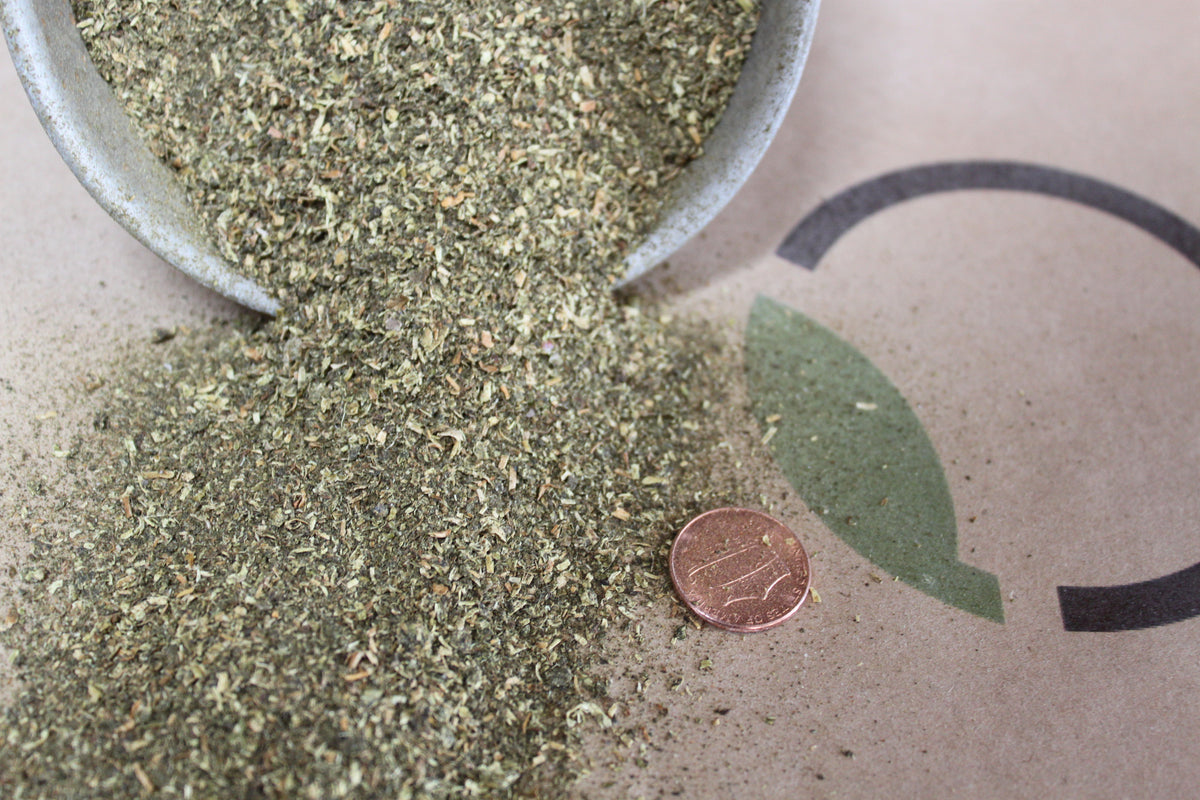
Ground alfalfa for garden beds, roses, and soil preparation. It supplies organic nitrogen and soluble potash while adding organic matter to the soil. Use it as part of a nutrient plan based on what your plants and soil need.
For general garden-bed preparation, use 2–5 lb per 100 sq ft. Start at the lower rate unless a soil test and your nutrient plan support more. The range comes from Colorado State University Extension, GardenNotes #234 (PDF), which describes it as generalized guidance, not a crop-specific rate.
| Measured area | Product amount | Approximate level US cups |
|---|---|---|
| 10 sq ft | 0.2–0.5 lb (91–227 g) | ½–1¼ cups |
| 100 sq ft | 2–5 lb | 5–12½ cups |
| 1 m² | 98–244 g | Use a scale |
Spread evenly and incorporate into the upper soil before planting. Around established plants, work shallowly without damaging roots and keep concentrated meal away from crowns. Water after application. Reassess nutrient need before reapplying; this is not an automatic 4–6-week feeding schedule.
Containers, lawns, and field crops need their own recommendation. Use the calculator to scale an adviser-supplied product rate. A garden-bed rate should not be carried over automatically to those uses.
Coverage is for one application. The calculator compares current bag prices; the table shows the coverage range without assuming every garden needs the same rate.
| Bag size | At 2 lb / 100 sq ft | At 5 lb / 100 sq ft |
|---|---|---|
| 1 lb | 50 sq ft | 20 sq ft |
| 2 lb | 100 sq ft | 40 sq ft |
| 3 lb | 150 sq ft | 60 sq ft |
| 4 lb | 200 sq ft | 80 sq ft |
| 15 lb | 750 sq ft | 300 sq ft |
| 40 lb | 2,000 sq ft | 800 sq ft |
One level US measuring cup weighs approximately 0.4 lb / 6.4 oz / 181 g. One pound is approximately 2½ cups. Measure by weight when possible.

Measure the bed and weigh the amount for your selected rate.
Distribute evenly. Avoid concentrated piles against plants.
Mix into the upper soil. Work shallowly near established roots.
Water in and reassess nutrient need before another application.
The garden-bed rate is 2–5 lb per 100 sq ft. To calculate pounds, multiply your area in square feet by your chosen rate and divide by 100.
Microorganisms break down organic nitrogen into forms roots can use. Temperature, moisture, and soil conditions affect that process, so a fixed release period or guaranteed bloom response would be misleading.
Potassium availability does not follow the same process as organic nitrogen. The 2.5% potash guarantee is expressed as K₂O, not elemental potassium.
Alfalfa meal contributes organic matter as well as nutrients. It is not a substitute for every part of a soil-management program. Additional phosphorus, magnesium, or other nutrients should address a demonstrated need.
Alfalfa naturally contains triacontanol, but isolated-compound research does not establish a predictable growth boost from a garden dose of meal. Read Maine Extension’s explanation.
Alfalfa meal is dried, ground alfalfa used to supply nutrients and add organic matter to soil. Greenway Biotech Organic Alfalfa Meal has a 2.5-0-2.5 grade: 2.5% total nitrogen and 2.5% soluble potash, expressed as K₂O.
For a general incorporated garden-bed application, use 2–5 lb per 100 sq ft. Start at 2 lb unless your soil test and nutrient plan support more. Spread evenly, mix into the upper soil before planting, and water in. This general range is adapted from Colorado State University Extension; it is not a crop-specific prescription.
One level US measuring cup weighs approximately 0.4 lb, or 6.4 oz (181 g), based on Greenway’s measurement. One pound is approximately 2.5 cups. Settling and how the cup is filled can change the weight; use a scale for greater accuracy.
For one application, a 15 lb bag covers approximately 750 sq ft at 2 lb per 100 sq ft, or 300 sq ft at 5 lb per 100 sq ft. Coverage depends on the selected rate.
It can be used in rose beds as a soil-applied nutrient source and organic amendment. Calculate the actual bed area rather than assuming one dose suits every bush. Around established plants, work shallowly without damaging roots, keep concentrated material away from crowns, and water in.
Nitrogen becomes available as microorganisms break down the organic material. Temperature, moisture, soil conditions, and the material itself affect the timing. Do not expect a guaranteed response within a fixed number of weeks. Reassess crop nutrient needs and other fertilizer inputs before applying again; do not automatically repeat every 4–6 weeks.
The zero means no available phosphate is guaranteed in this grade. It does not mean the plant material contains absolutely no phosphorus. Add a phosphorus fertilizer only when your soil test or nutrient plan shows a need.
These uses need their own nutrient plan. The calculator can scale a product rate supplied by your grower or adviser, but it does not choose a universal dose for these uses. Do not transfer a garden-bed rate directly to a container mix or a lawn.
This is a ground plant meal, not a fully soluble fertilizer. Mixing it with water does not create a complete nutrient solution with a known analysis. Use it as a soil amendment rather than adding the meal to hydroponic reservoirs or irrigation injectors.
Alfalfa contains triacontanol, a compound studied in plant growth research, but that does not establish a predictable growth boost from this meal. Alfalfa meal can contribute nitrogen-rich material to compost. No universal compost-layer dose or homemade-tea recipe is specified here because composition and conditions vary.
Growers in certified organic production should confirm the exact Greenway product with their certifier before use. Contact Greenway for the available product documentation.
Avoid breathing dust and avoid contact with eyes, cuts, or sores. Wash after handling. Keep out of reach of children and pets; do not swallow. Reseal and store cool and dry. Contact Greenway for the current label, safety data sheet, or available product documentation.
Keep out of reach of children and pets. Do not swallow. Avoid breathing dust or contact with eyes, cuts, and sores. Wash after handling. Reseal the bag and store cool and dry.
Packaged by Greenway Biotech, Inc. · 17861 Road 24, Madera, CA 93638